In Naples eating standing up is not a compromise. For a lot of the best food, it is the correct way.
Most of what follows was invented because people had no kitchen, no oven or no money. That's not a charming detail: it's the whole reason this food exists, and it's why it's so good at what it does — cheap, filling, eaten with your hands, on a step.
Pizza fritta: a disc of dough filled with ricotta, pork cracklings and provola, folded and deep-fried until it puffs.
It comes from the post-war years, when wood-fired ovens had been destroyed and frying needed only a pan. It was made and sold mostly by women, from the doorways of ground-floor homes, often on credit — eat today, pay in a week. That system is the subject of an episode of De Sica's L'oro di Napoli, with Sophia Loren.
Very hot when it arrives. Take the first bite carefully.
A paper cone of fried things: courgette flowers, aubergine, potato croquettes, small fish, arancini di riso. There's a fried-fish version and a fried-vegetable version.
It costs a few euros and it's a meal.
A small disc of pasta — usually bucatini — bound with béchamel, peas and cured ham, breaded and fried. Dense, absurd, excellent.
It is the Neapolitan answer to leftover pasta, and one of the things visitors most often miss.
The pastry: dozens of paper-thin layers filled with ricotta, semolina and candied peel. Riccia is the crisp shell-shaped one; frolla is the smooth shortcrust version.
By tradition the recipe came from a convent on the Amalfi Coast and became an urban mass product in Naples. Eat it warm, in the morning, with a coffee at the bar.
Ring-shaped, hard, made with lard, pepper and almonds. Sold from stalls on the seafront and in the markets. They go with beer and with sitting still.
Soaked in rum. Almost certainly of Polish-French origin, adopted by Naples and never given back. Sì nu babà — you're a babà — is a compliment here.
Small thick cup, pre-heated, very short extraction, often sugared unless you say amaro. Drunk standing, in about ten seconds. Cheaper at the bar than at a table, and that's normal.
This is the cheapest good eating in Western Europe. A pizza with a drink under ten euros, a cuoppo for a few euros, a coffee for pocket change.
If a street-food stall is charging tourist prices, walk fifty metres. There will be another one.
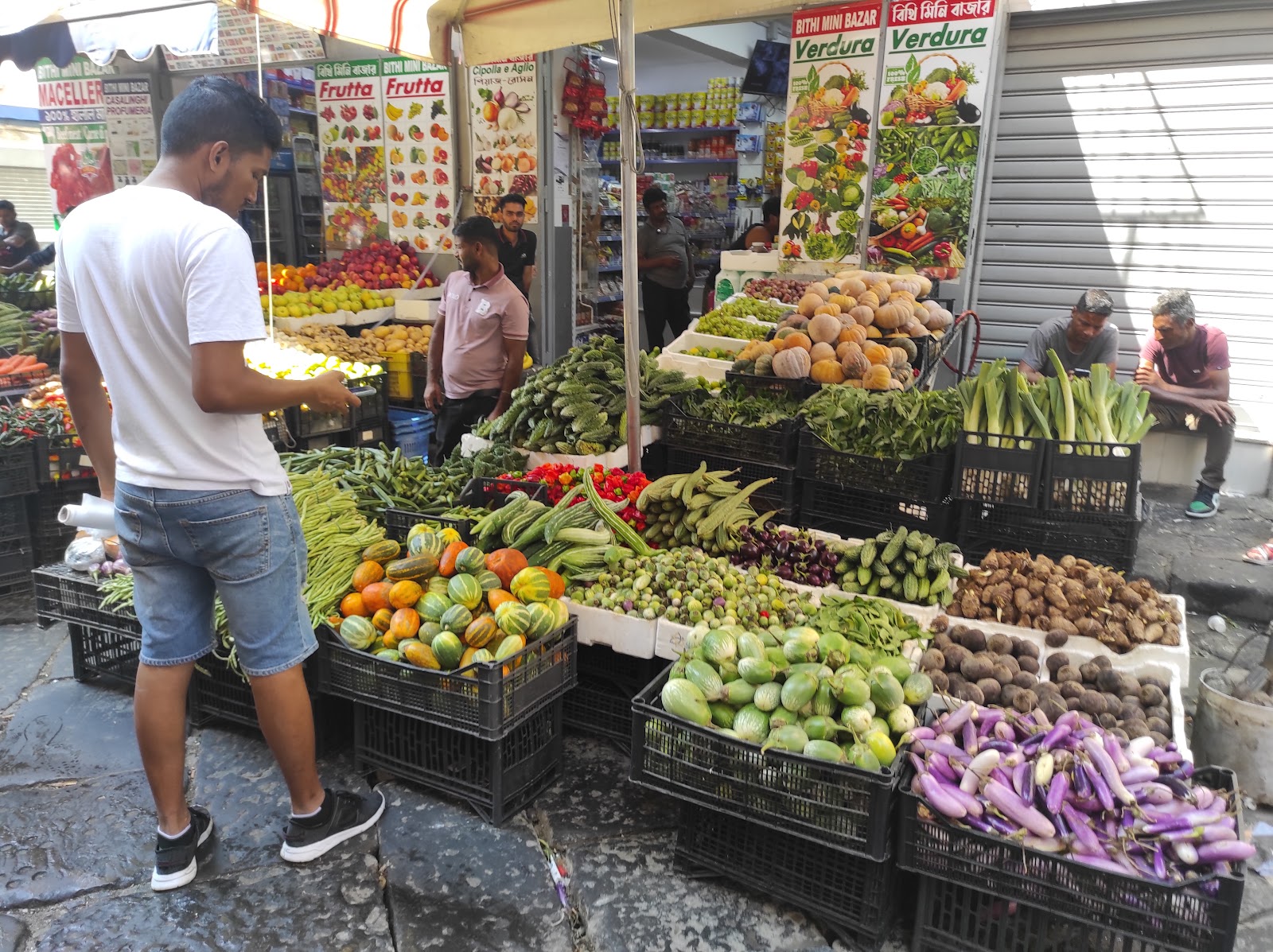
The historic centre and the Quartieri Spagnoli for fried food. The Pignasecca and Porta Nolana markets, in the morning, for everything. The Sanità for neighbourhood prices.
Markets are busy places: keep bags closed and in front of you, as you would anywhere.
This guide is written and maintained in Naples. The Italian version of the site has far more: hundreds of places, neighbourhood guides and long-form stories about the city. Read it in Italian.